What Does a Musculoskeletal Assessment tell is and why is it important for trainers to learn how to perform them?
Technology can show us what is happening during movement. A comprehensive musculoskeletal assessment helps us understand why it is happening. EMG sensors can provide information about muscular activity and recruitment patterns. Force plates can quantify how an individual produces, absorbs, and distributes force. Both provide valuable data and can help identify asymmetries, compensations, and movement inefficiencies.
But identifying a movement dysfunction is only the beginning.
Before attempting to correct it, we need to determine what is driving that movement strategy. Is the individual moving that way because of a physical limitation, such as restricted joint mobility, tissue extensibility, or available range of motion?
Or do they possess the necessary physical capacity, but demonstrate a learned movement strategy, coordination issue, or habitual pattern?
These are two very different problems, and they should not automatically receive the same intervention. The DBC Orthopedic Assessment allows us to differentiate between what an individual physically cannot do and what they simply do not do during movement.
That distinction provides us with the information necessary to make better decisions regarding corrective exercise, mobility, movement retraining, and ultimately performance programming. Before we attempt to change how someone moves, we must first understand why they move that way in the first place.


 Image 1 of 9
 Image 2 of 9
 Image 3 of 9
 Image 4 of 9
 Image 5 of 9
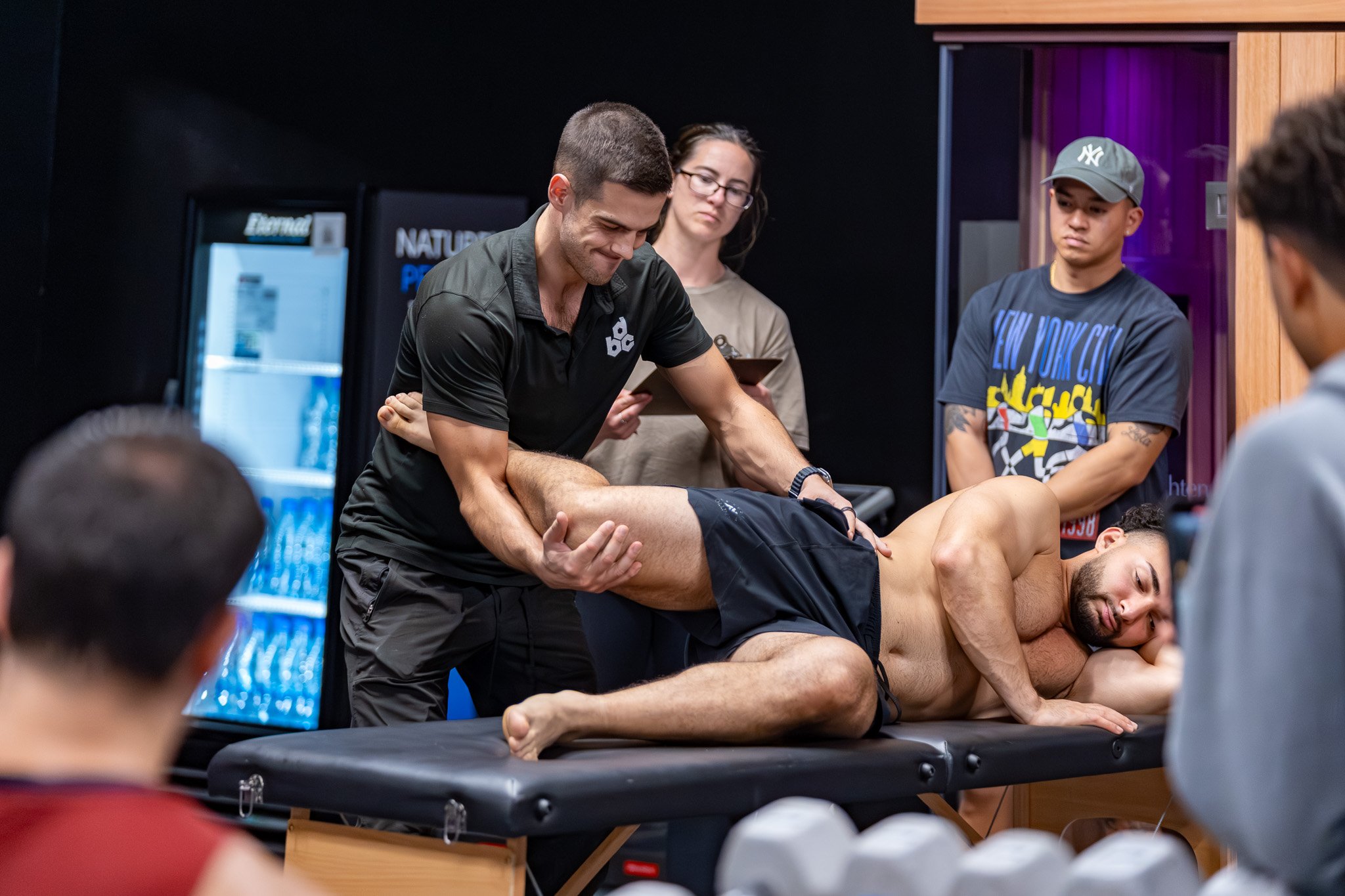 Image 6 of 9
 Image 7 of 9
 Image 8 of 9
 Image 9 of 9